Digital Access for Rural Students
Research and communications design to understand digital access barriers in rural Michigan and support students, families, and educators.
ROLE
Researcher & Communication Designer
TIMELINE
Sep – Nov 2024
TEAM
5 members (Ciany, Goni, Sherry, Sophia, Ruizhe)
TOOLS
Interviews, Affinity Mapping, Communication Design
Marcus is a sophomore at a high school in northern Michigan. His teacher assigns an essay due online by Friday. Marcus doesn't have broadband at home — he does his homework on his phone, using whatever data he has left. He types out the whole thing on a small screen, reformatting as he goes. When he tries to attach a file, his data runs out. The assignment uploads blank. His GPA dips. His teacher doesn't know why. No one connects the dots.
How might we help rural Michigan communities understand — and act on — the connection between digital access and student outcomes?
✦ SITUATION
The digital divide is a policy problem, not just an infrastructure one
Michigan will receive $362 million in federal broadband funding over the next decade — but the money reaching students depends on whether communities want it. In some districts, residents have actively resisted new infrastructure. Others lack the digital literacy to know what resources already exist. Students caught in between face real academic consequences: mobile-only students average half a GPA point lower and score 7 percentile points lower on standardised tests.
✦ TASK
Understand the barriers, then make them communicable
Our goal wasn't to design an app — it was to understand how the digital access gap plays out on the ground, and to give NTCA practical communication tools that help communities understand why this matters and what they can do. My contributions spanned research, synthesis, and communication design.
✦ MY CONTRIBUTIONS
My contributions
Interview protocol & facilitation
Wrote the protocol and ran interviews with state education officials, a rural teacher, and a student
Research synthesis
Structured and synthesized qualitative data through affinity mapping and theme extraction
Communication design
Simplified technical findings into visuals and narratives NTCA partners could act on
Deliverables & presentation
Designed poster, pamphlet, and social content; co-presented findings to NTCA
✦ ACTIONS — METHODOLOGY
Methodology
We combined secondary research on state and federal broadband policy with stakeholder interviews — three officials from the Michigan Department of Education, a science teacher at Rudyard High School, and a student from a rural Michigan district. Data was synthesized through affinity mapping to surface patterns across stakeholder groups.
✦ ACTIONS — KEY INSIGHTS
What we found
Funding exists — community will doesn't always
Community priorities and awareness shape whether federal infrastructure money reaches students. Some districts have actively resisted new connectivity.
Device access and digital literacy compound the gap
Schools with Chromebook programs and digital literacy courses show measurably better student outcomes — it's not just about broadband at home.
Mobile-only students pay an academic price
Students relying solely on mobile data average half a GPA point lower and score 7 percentile points lower on standardized tests.
Families and local leaders are the real decision-makers
Policy alone doesn't move communities. The people closest to students — parents, teachers, local officials — needed materials that spoke their language.
From our interviews
"Students prefer paper assignments because of their personal connectivity at home."
"There's at least one community near U of M that would not allow any more cell phone towers because they didn't want the connectivity."
"Michigan will receive $362,985,055 in federal funding over the next ten years to expand broadband access to 249,263 sites statewide."
✦ RESULTS — OPPORTUNITIES
What the findings pointed to
Speak their language
Frame digital access in terms of grades, scholarships, and career readiness — not infrastructure policy
Equip schools directly
Give teachers and staff simple, adaptable assets they can put in students' hands without extra production
Support the adults too
Parents and educators need scripts and resource guides — they're the ones making connectivity decisions at home
✦ RESULTS — OUTPUTS
What we delivered
Lightweight, repeatable resources for schools and community spaces:
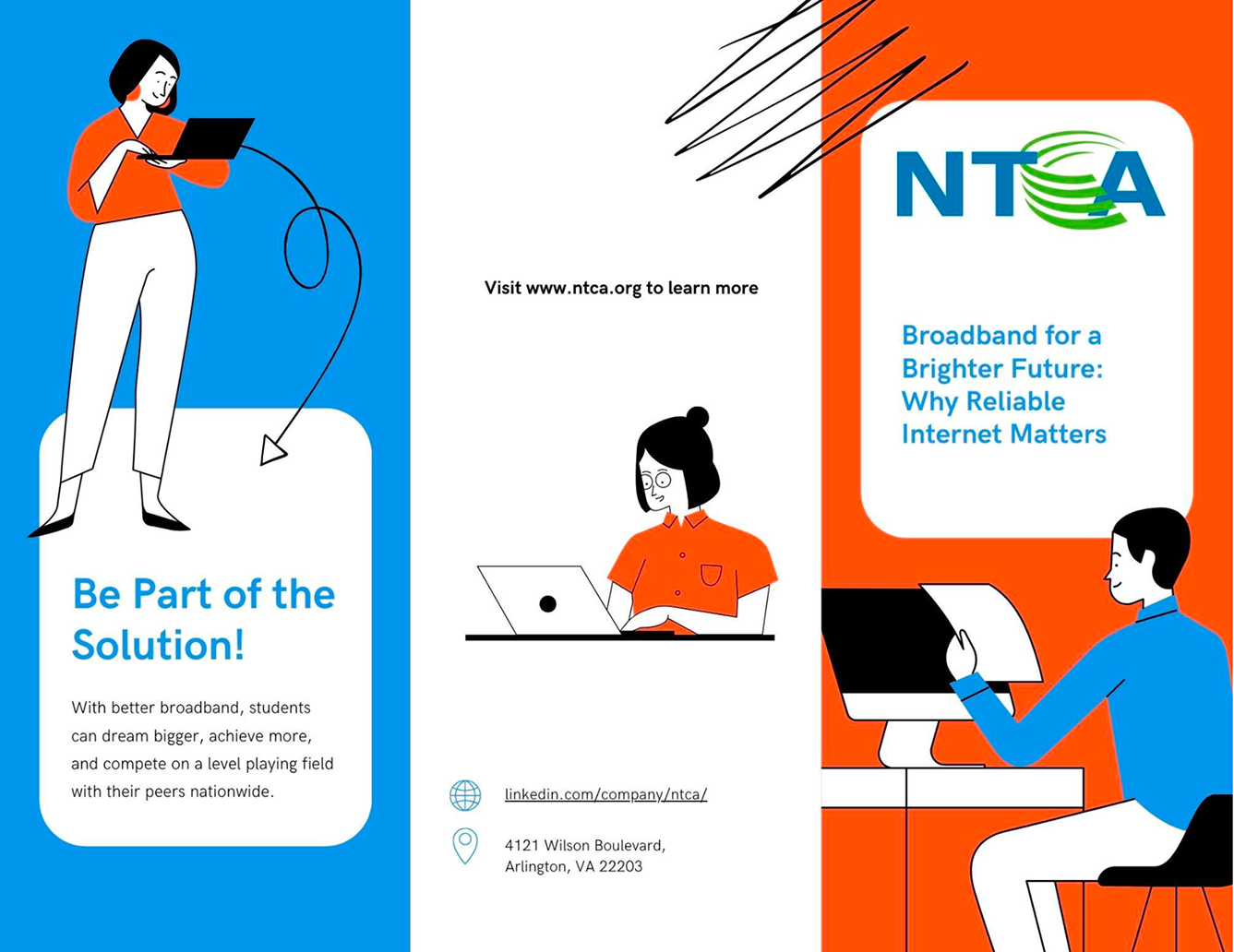
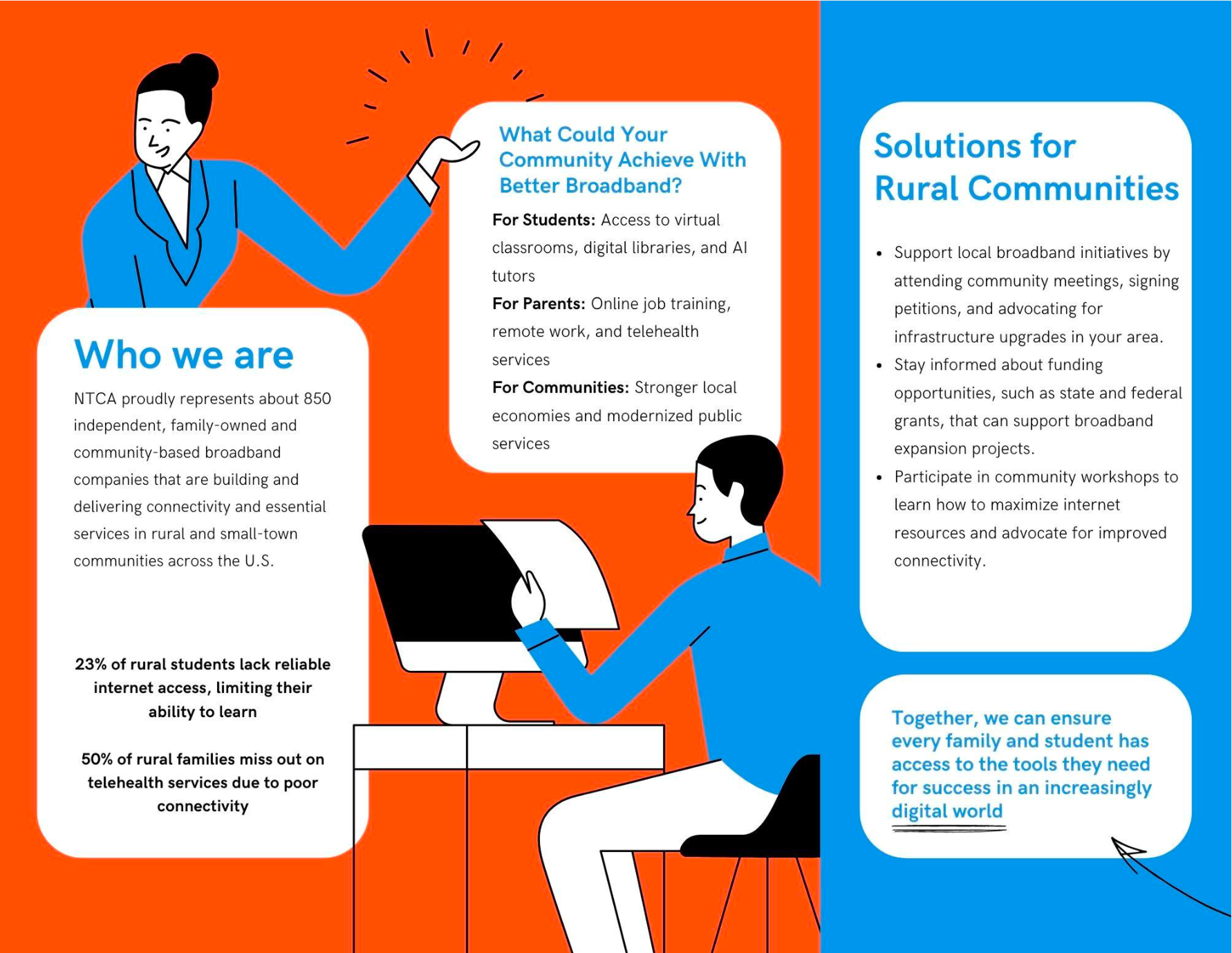
Pamphlet
Designed for distribution at school libraries, community centers, and local offices. Available as a print-ready template and a digital version for NTCA's website.
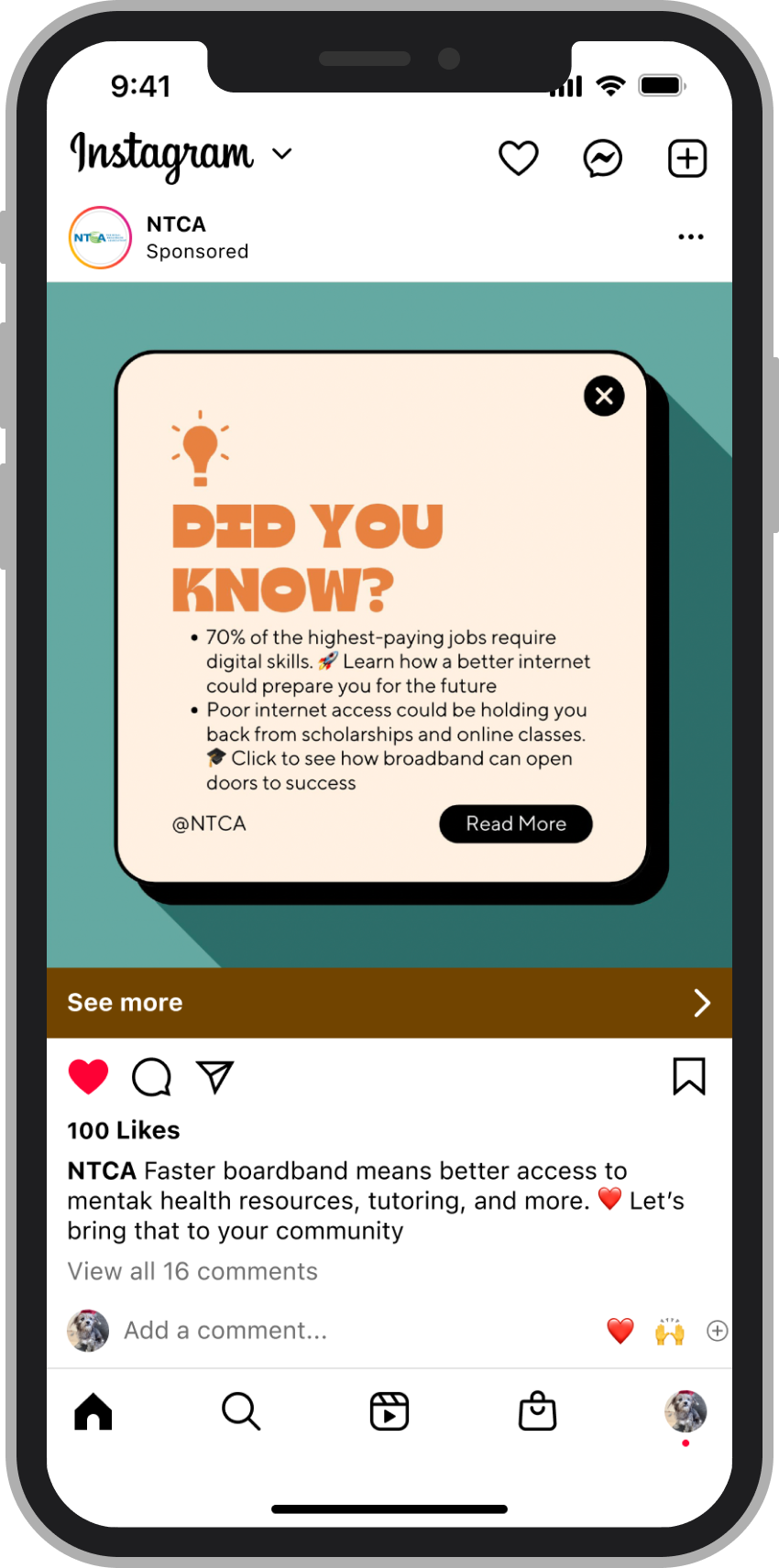
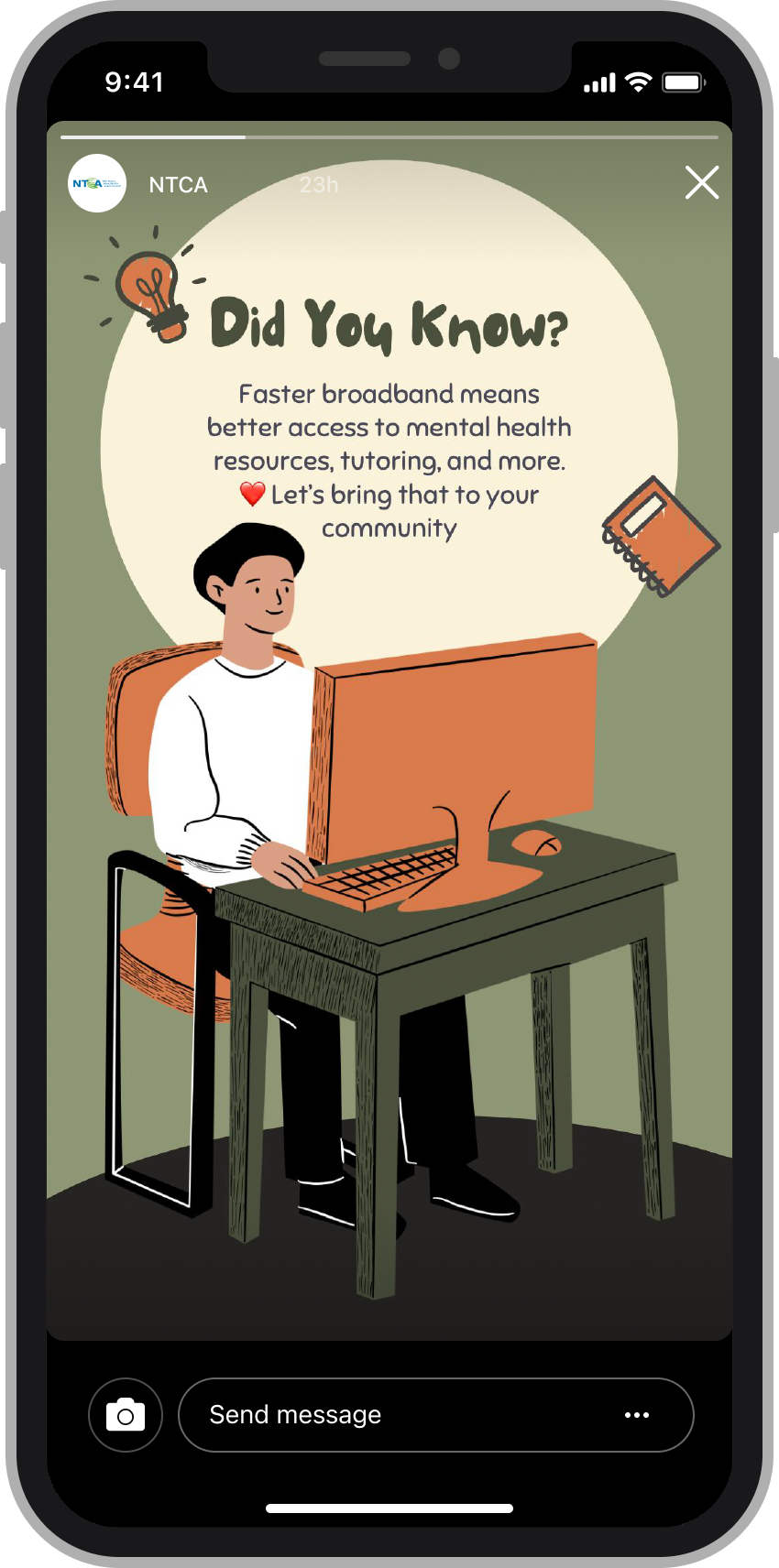
Social Media
Instagram post and story concepts targeting high school students — framing broadband access in terms of grades, scholarships, and career readiness rather than infrastructure policy.
Poster
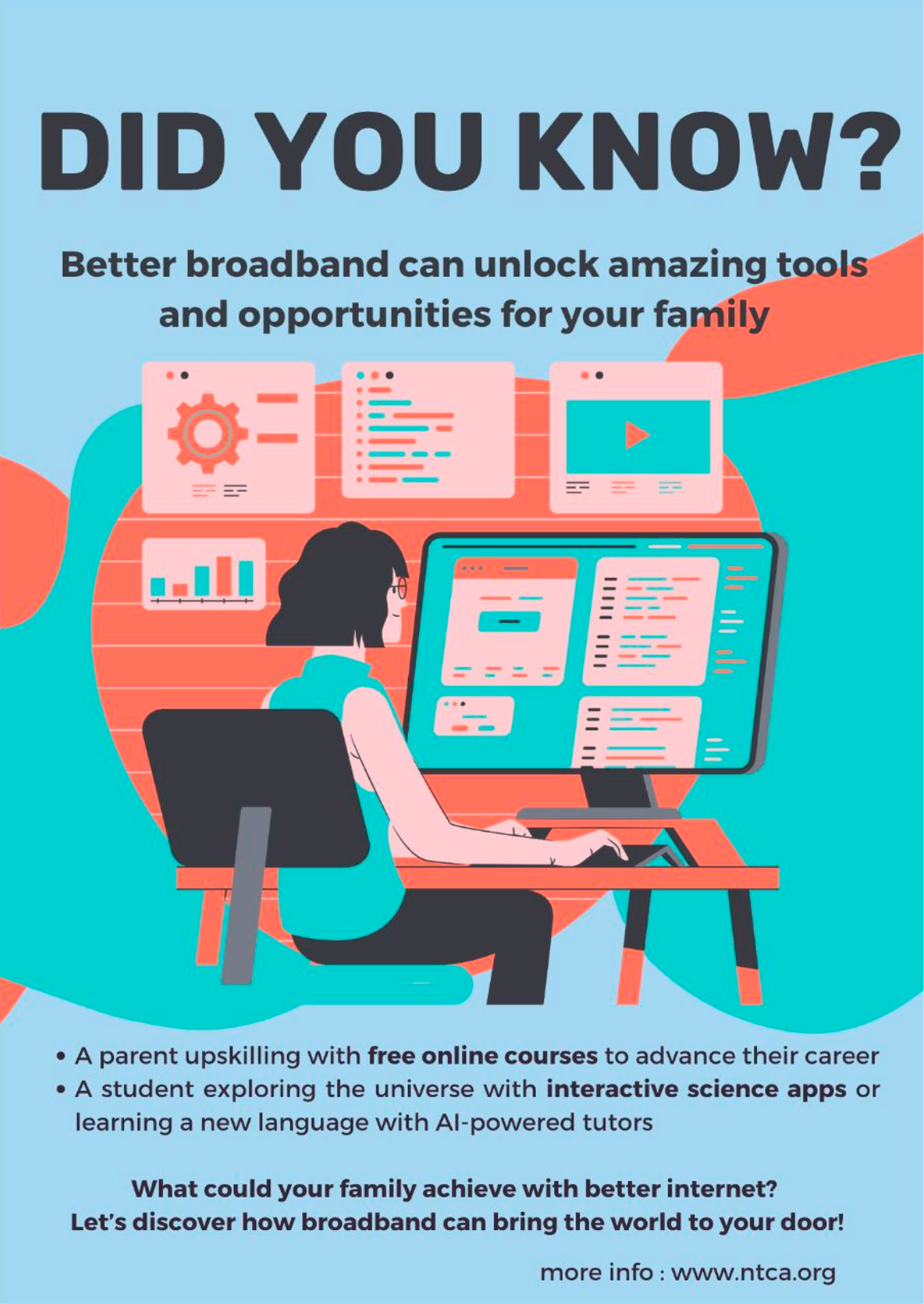
Community-facing poster for libraries and school offices — leading with the question "Did You Know?" to spark curiosity rather than lecture about policy gaps.
✦ REFLECTION
Reflection
This project was less about designing a product and more about translating research into action — an equally complex design challenge.
Research is only useful if it reaches the right people in the right form
The GPA and test score data we surfaced wasn't new — it existed in policy reports. The gap was that it hadn't been designed for community members. Every communication deliverable was a direct response to an interview insight: teachers needed print-ready materials (pamphlet), students needed accessible language (social content), and local officials needed something that reframed infrastructure as an academic equity issue (poster).
Navigating ambiguity is a research skill
When we couldn't access students at Rudyard High School directly, I pushed to expand our scope rather than leave a gap in our participant map. Finding a comparable student from a nearby rural district meant our synthesis wasn't missing the most important voice in the system. Research plans don't survive contact with reality — the question is whether you adapt or report a limitation.
If I had more time
I'd want to pilot the materials in one school and measure whether they actually shift awareness or resource-seeking behavior — not just whether they look clear. Communication design for policy issues has a long feedback loop, and I'd want to close it. I'd also want to interview more students directly, not just teachers and administrators who describe student experiences secondhand.
✦ NEXT STEPS
Next Steps
- Test materials with one rural high school
- Expand student interviews
- Package workshop toolkit for schools and libraries
Materials available on request (interview protocol, synthesis notes, report, slides)